 Skip to content

Welding Jackets




How to Choose a Welding Jacket
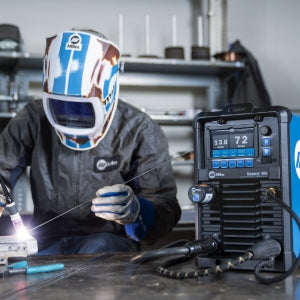
A welding jacket is the layer between you and everything a weld throws off: sparks, hot spatter, UV radiation, and the occasional drop of molten metal. Weld without one and your regular clothes take the hits, and regular clothes lose. Cotton work shirts catch fire and keep burning, and anything synthetic melts and sticks to skin. A proper welding jacket is built to do the opposite, to resist ignition, shed spatter, and keep the heat off you so you can focus on the arc. This guide covers the materials, how to pick the right one for your work, and how to keep it protecting you for years.
Why a Welding Jacket Matters
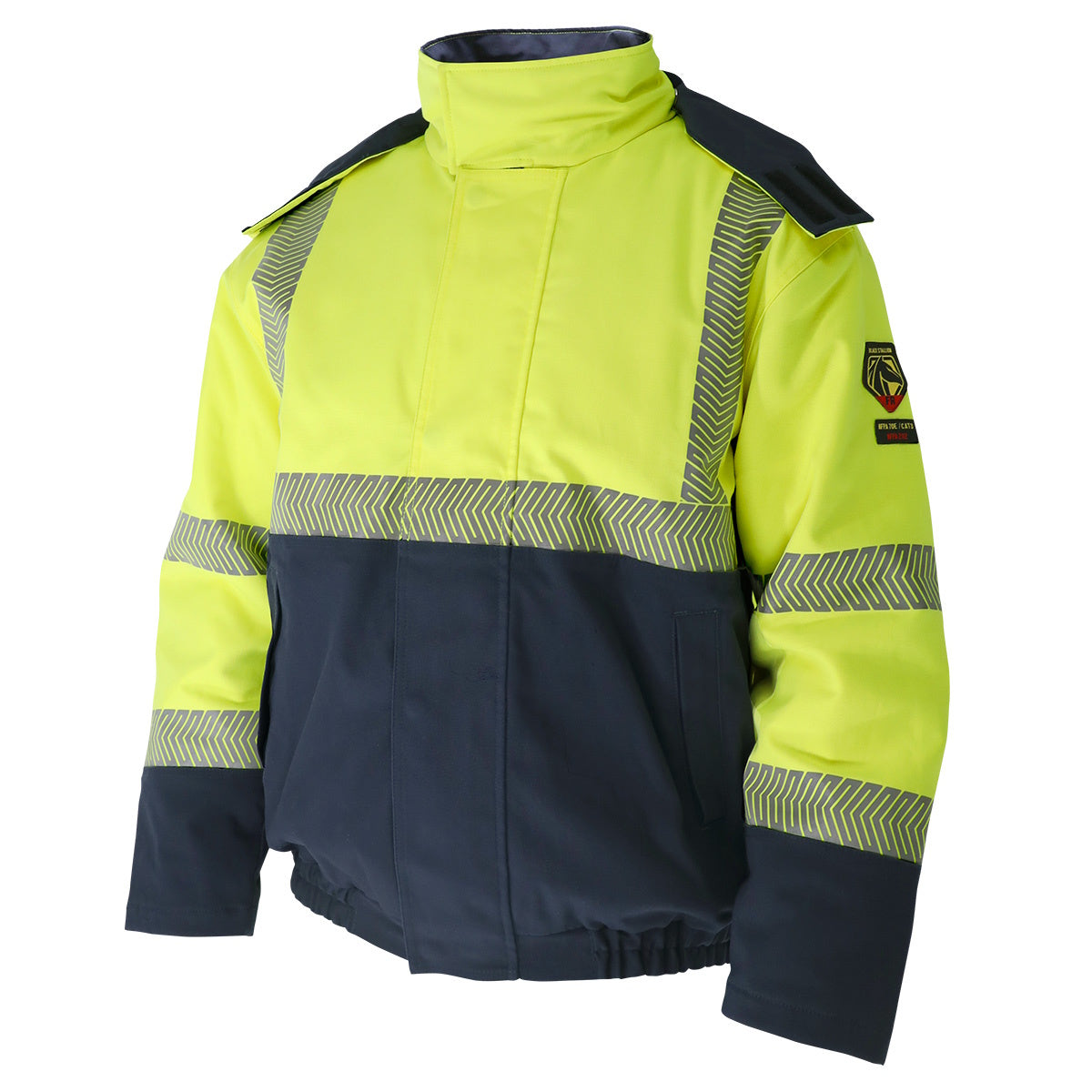
Welding produces spatter that can reach well past your bench and sparks that find every gap in your clothing. Over a shift, that means burns, singed sleeves, and UV exposure that reddens skin like a sunburn. A dedicated welding jacket gives you full-coverage protection that ordinary workwear cannot, and it is rated to take heat and flame without igniting or melting. It is the single most important piece of body protection at the bench, and it is the difference between brushing spatter off your jacket and feeling it on your arm. ANSI Z49.1, the core U.S. welding safety standard, calls for durable, flame-resistant clothing that covers exposed skin, and many FR jackets also carry an NFPA 2112 label.
Leather vs FR Cotton vs Hybrid
Three materials cover almost every welding jacket, and each is built for a different kind of work:
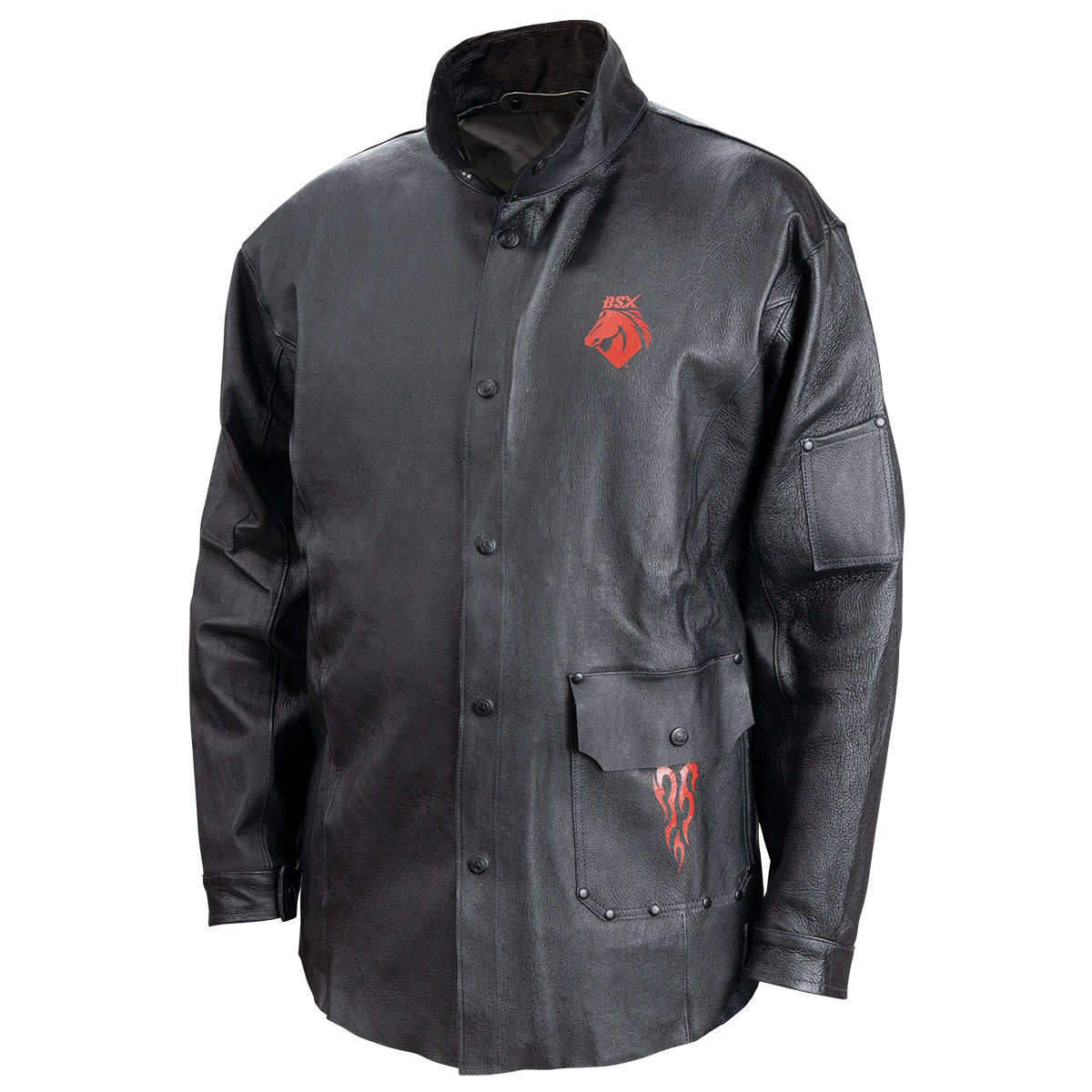
- Leather. Naturally flame-resistant, leather does not ignite, melt, or drip, and it forms a tough physical barrier against molten metal and heavy spatter. It is the choice for stick welding, overhead work, grinding, and anything high-heat. The trade-off is that it runs heavier and hotter and costs more. Leather jackets typically run about $80 to $230, depending on weight and construction.
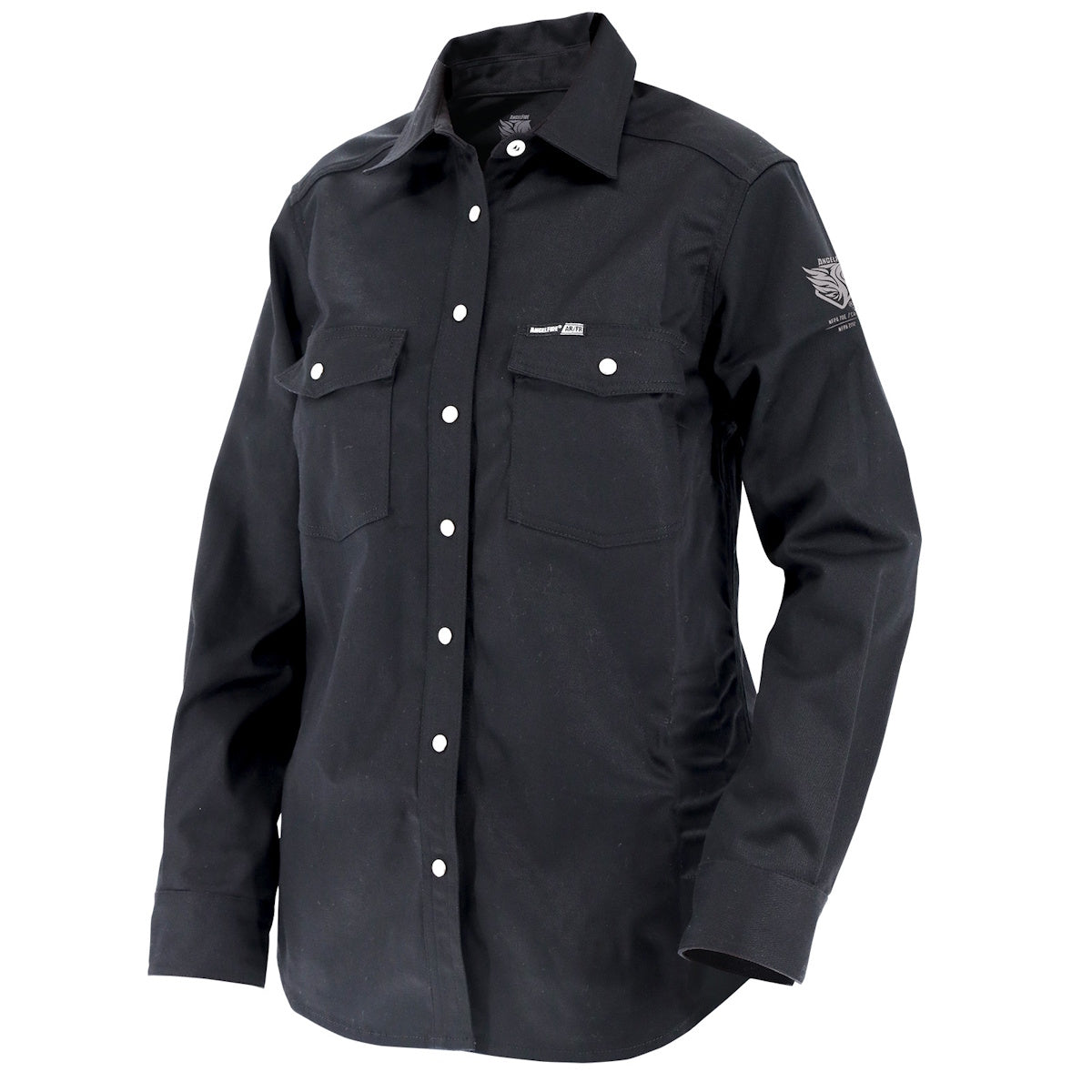
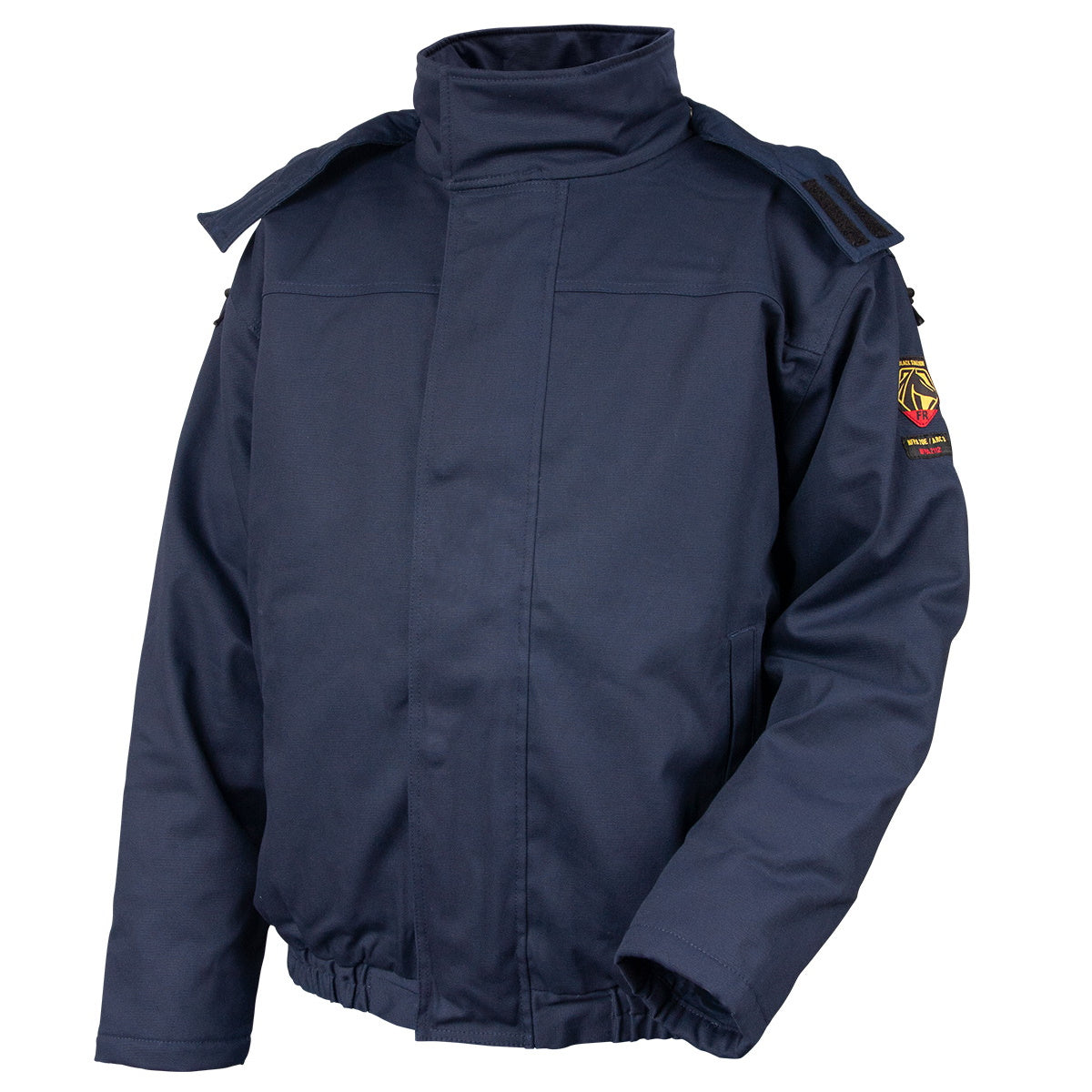
- FR cotton. Flame-resistant treated cotton chars and self-extinguishes instead of burning, and it is far lighter and more breathable than leather, which makes it comfortable for long shifts. It is ideal for TIG and lighter MIG work where spatter is lower. FR cotton jackets often start under $20 and run up to about $60.
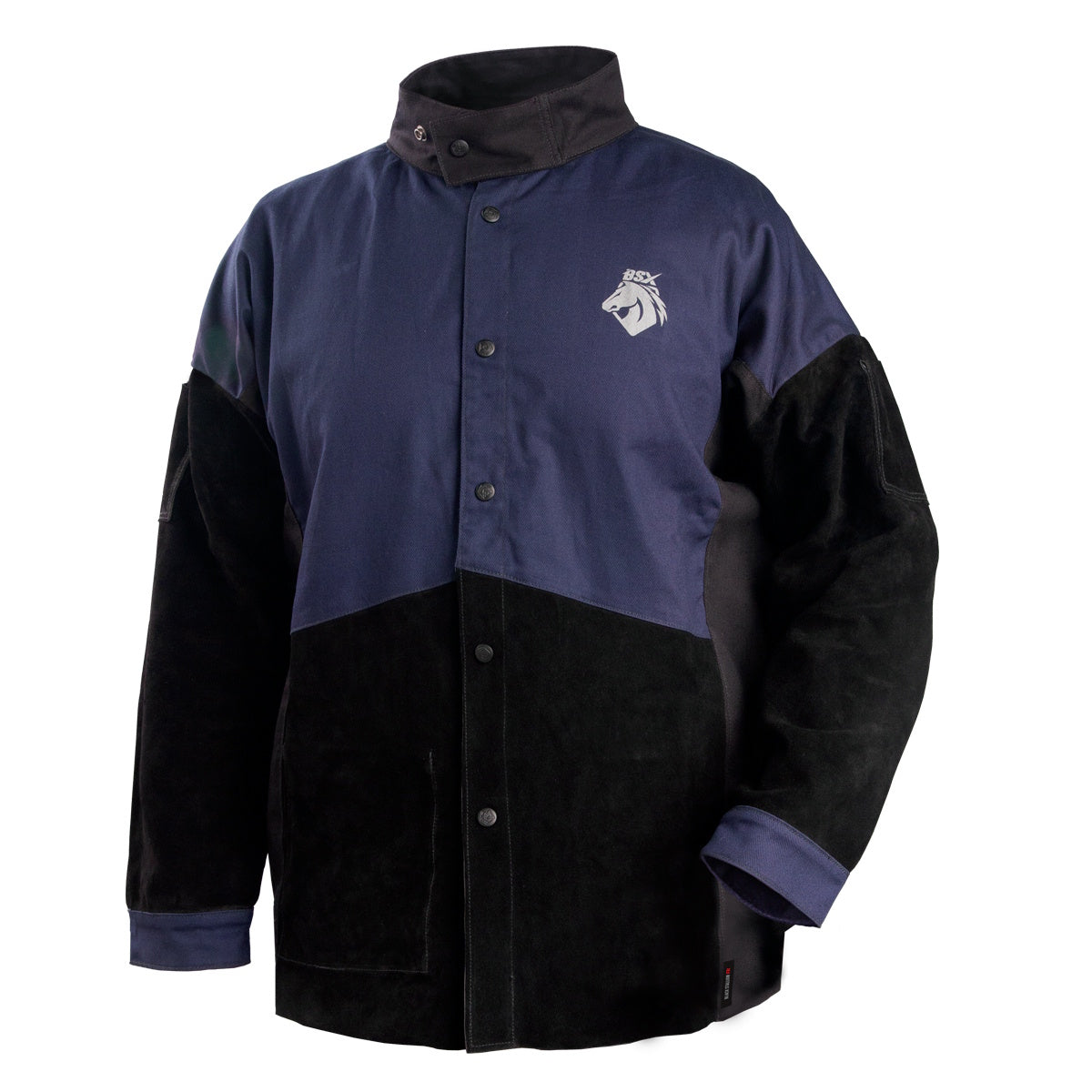
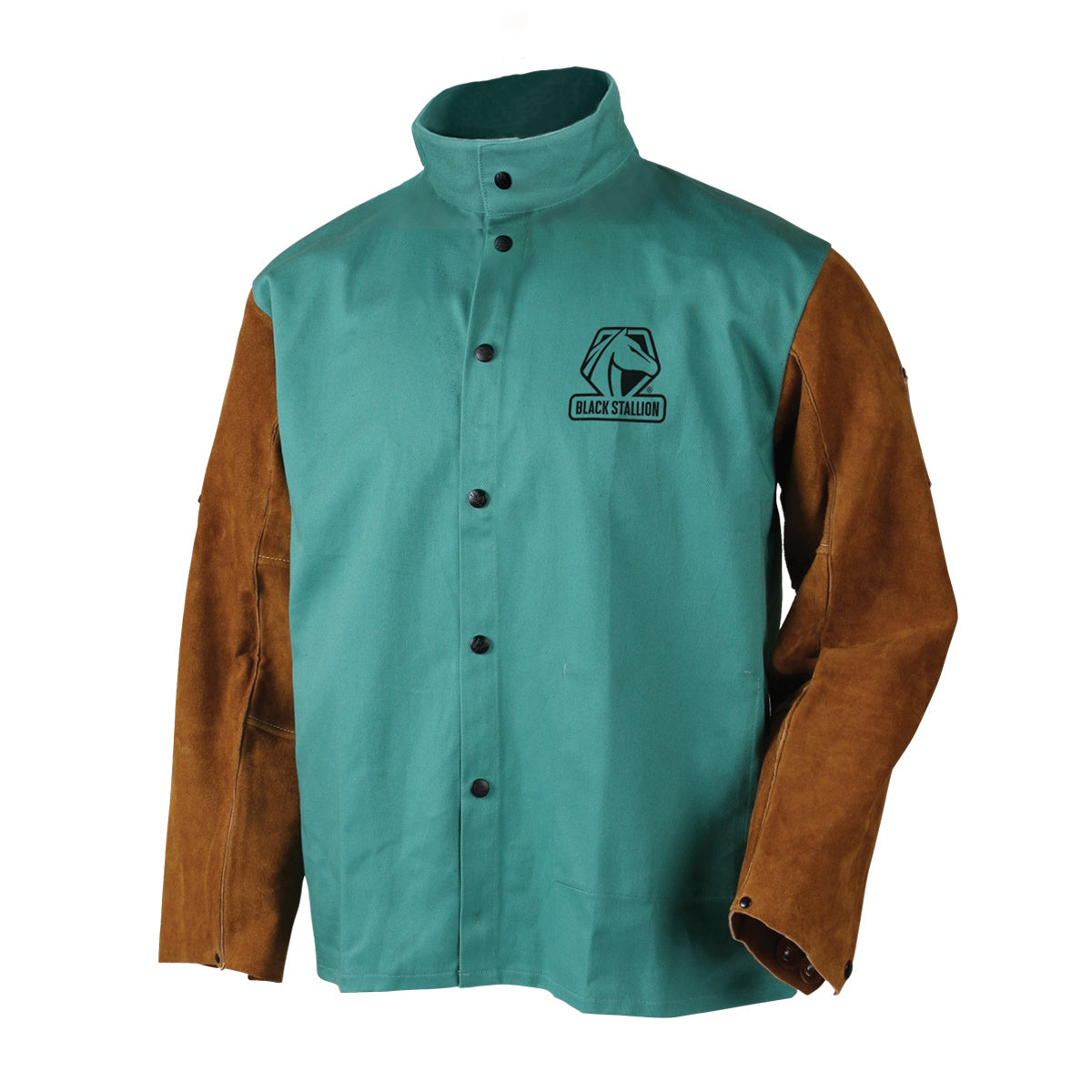
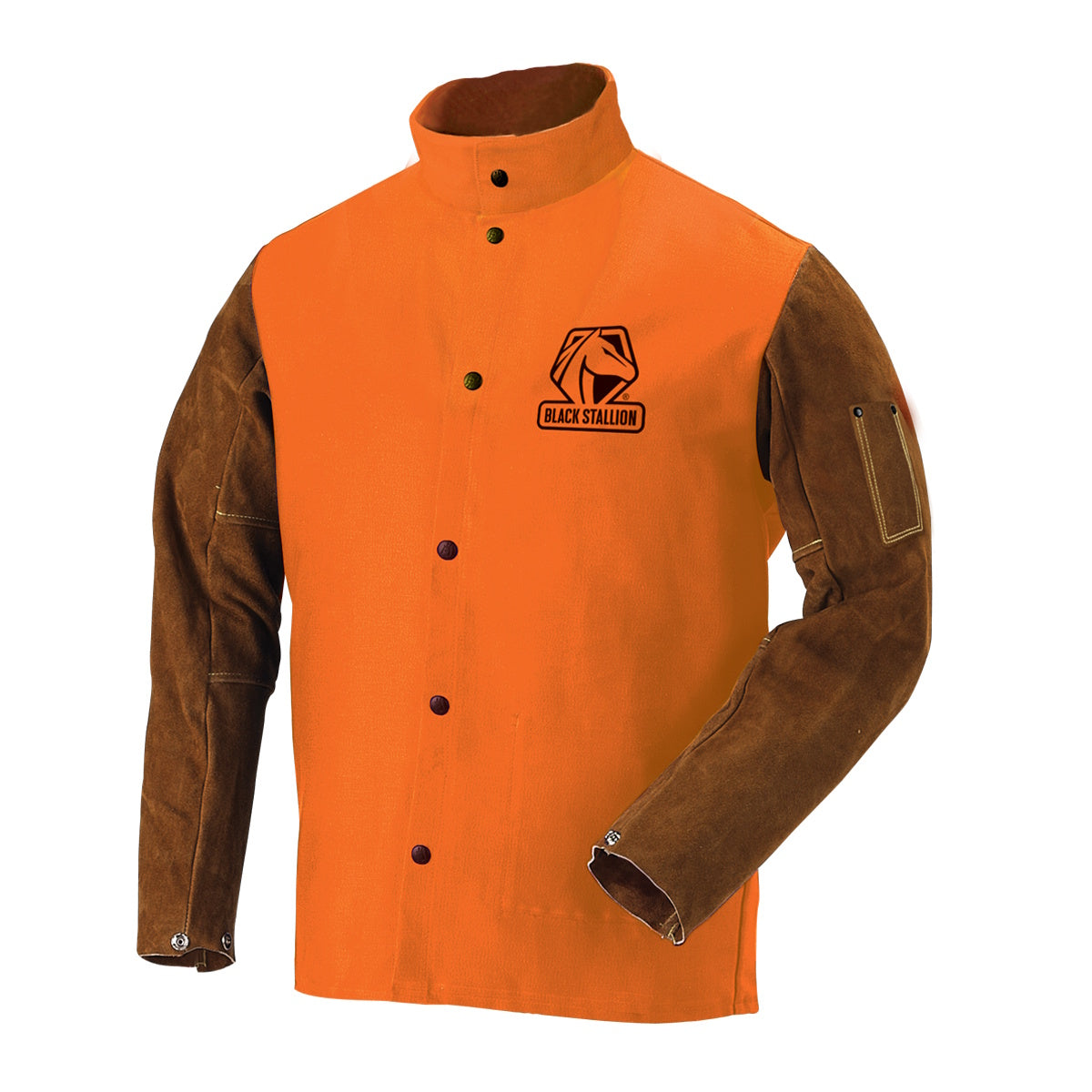
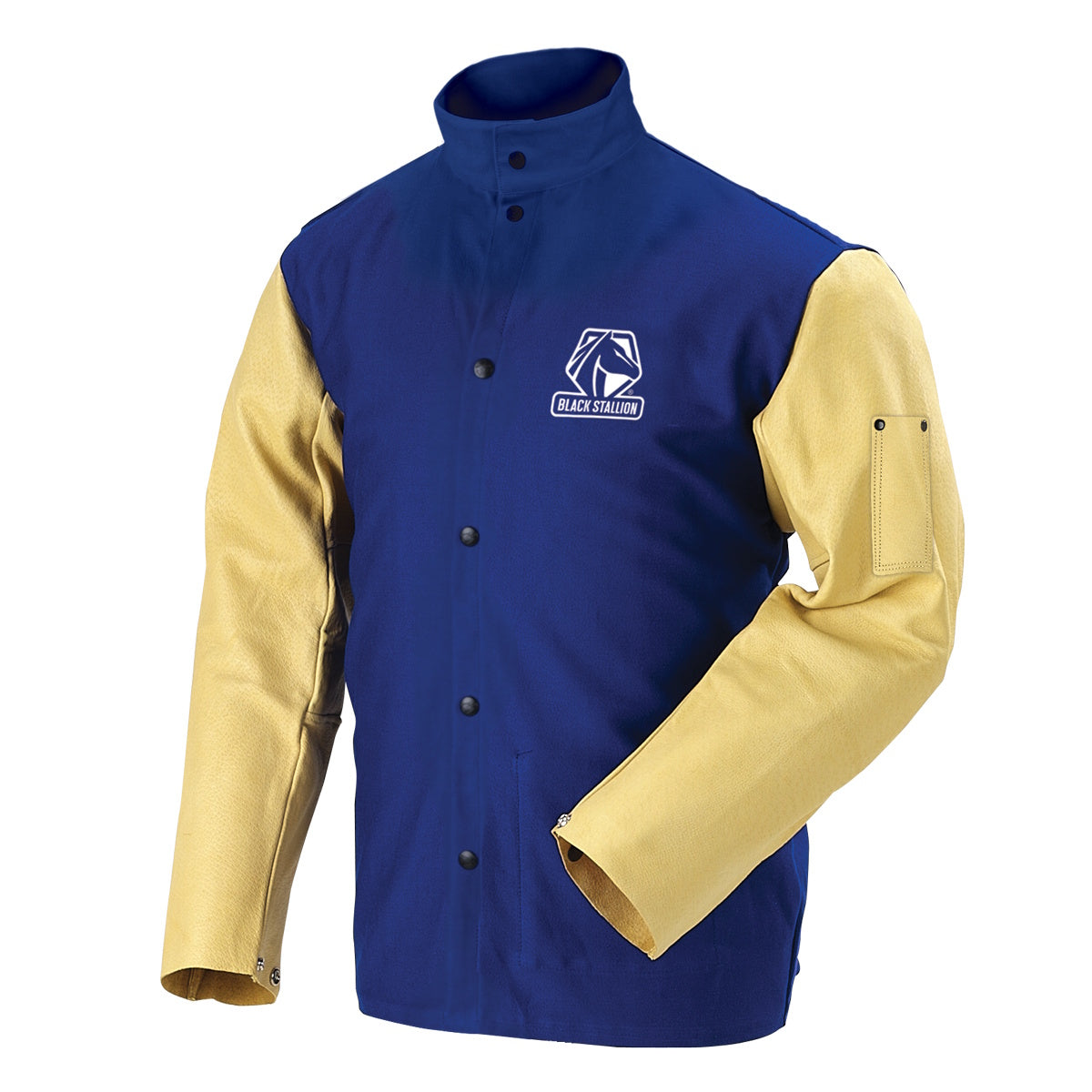
- Hybrid. A hybrid pairs an FR cotton body with leather sleeves, putting the tougher material on the arms where spatter lands and keeping the breathable material on your torso. It is a strong all-around pick, usually around $45 to $130.
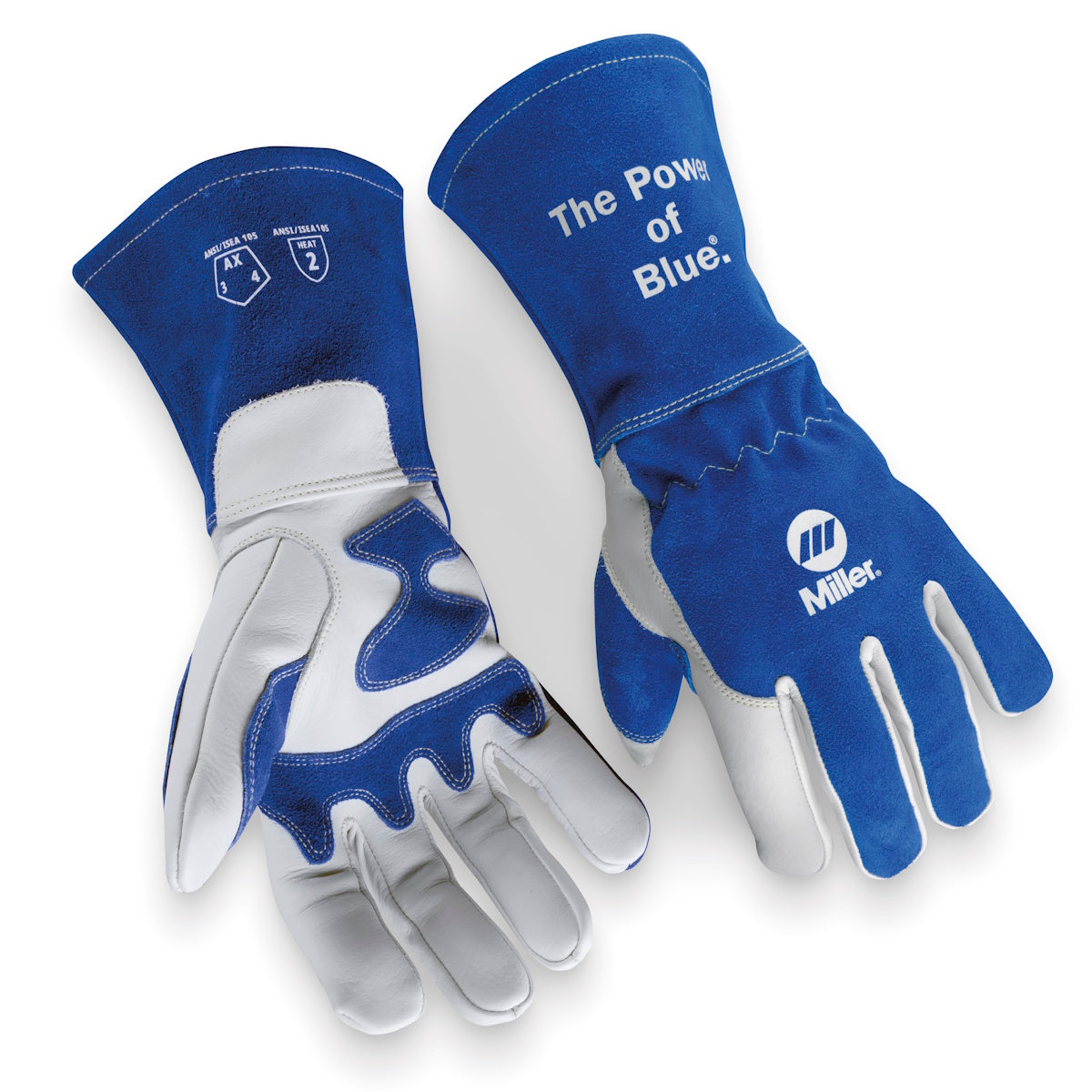
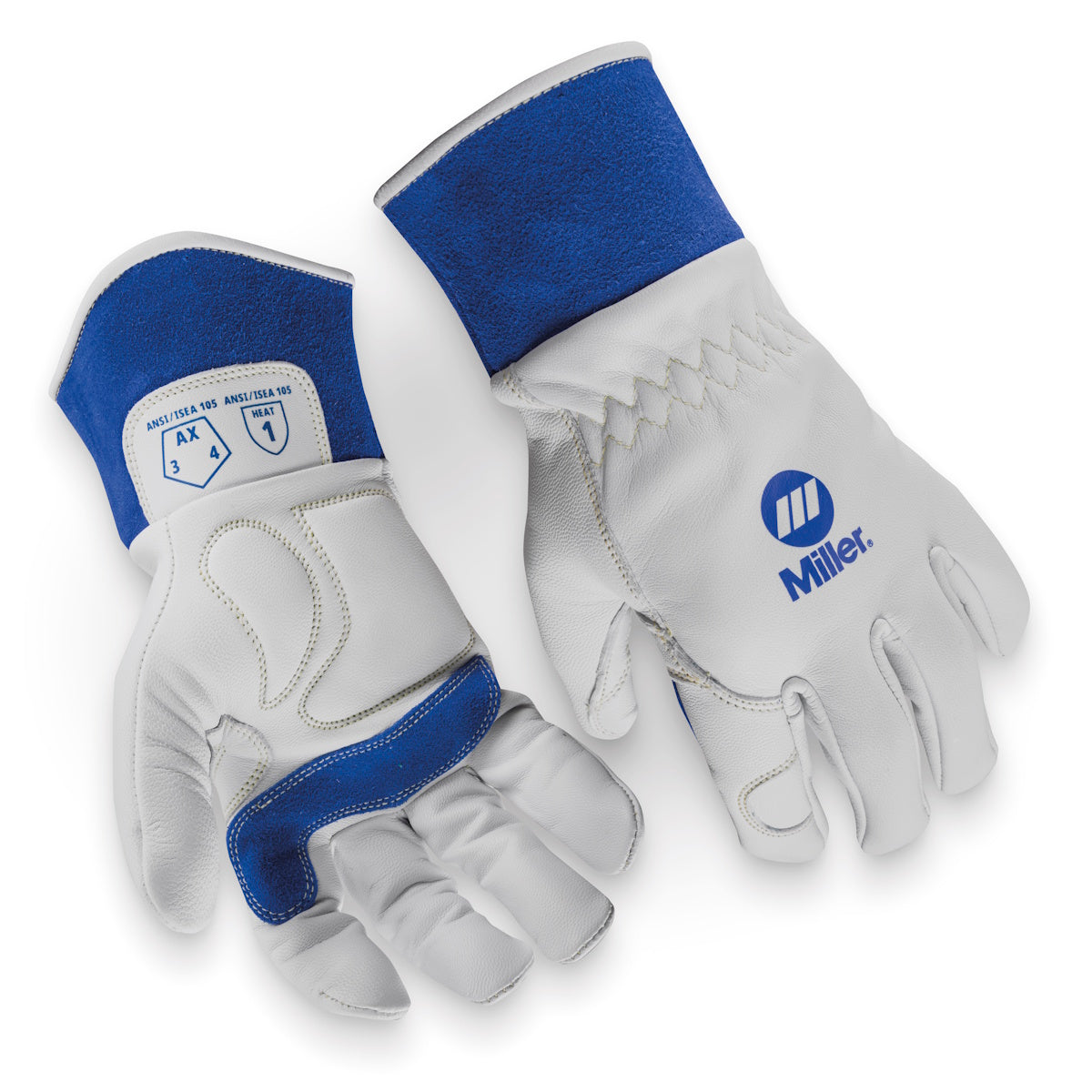
You can shop these across brands like Black Stallion, Lincoln, and Miller, and round out your setup with matching welding gloves, aprons, and other protective gear.
Choosing the Right Weight for Your Process
Match the jacket to how much heat and spatter your process throws:
- Light-duty (MIG and TIG). Lower-spatter processes let you run a lighter FR cotton or lighter-weight leather jacket. You stay cooler and move more freely, which matters over a full day of precision work.
- Heavy-duty (stick and overhead). Stick welding, overhead positions, and heavy grinding throw more spatter and molten metal, and gravity works against you overhead. That calls for heavier leather that can take a direct hit without flinching.
When in doubt, size the protection to your hottest, dirtiest job, not your easiest one.
Sizing and Fit
A welding jacket only protects the skin it covers, so fit matters as much as material:
- Leave room to layer, especially if you weld in cold shops or outdoors, and size up if you plan to wear a hoodie underneath
- Check sleeve length so the cuffs reach your wrists and overlap your gloves with no gap for sparks to find
- Aim for full coverage of your torso and arms, with a collar you can close to protect your neck
- Avoid a fit so loose it snags or catches spatter in folds, or so tight it restricts the reach and movement welding demands
Beyond the Jacket
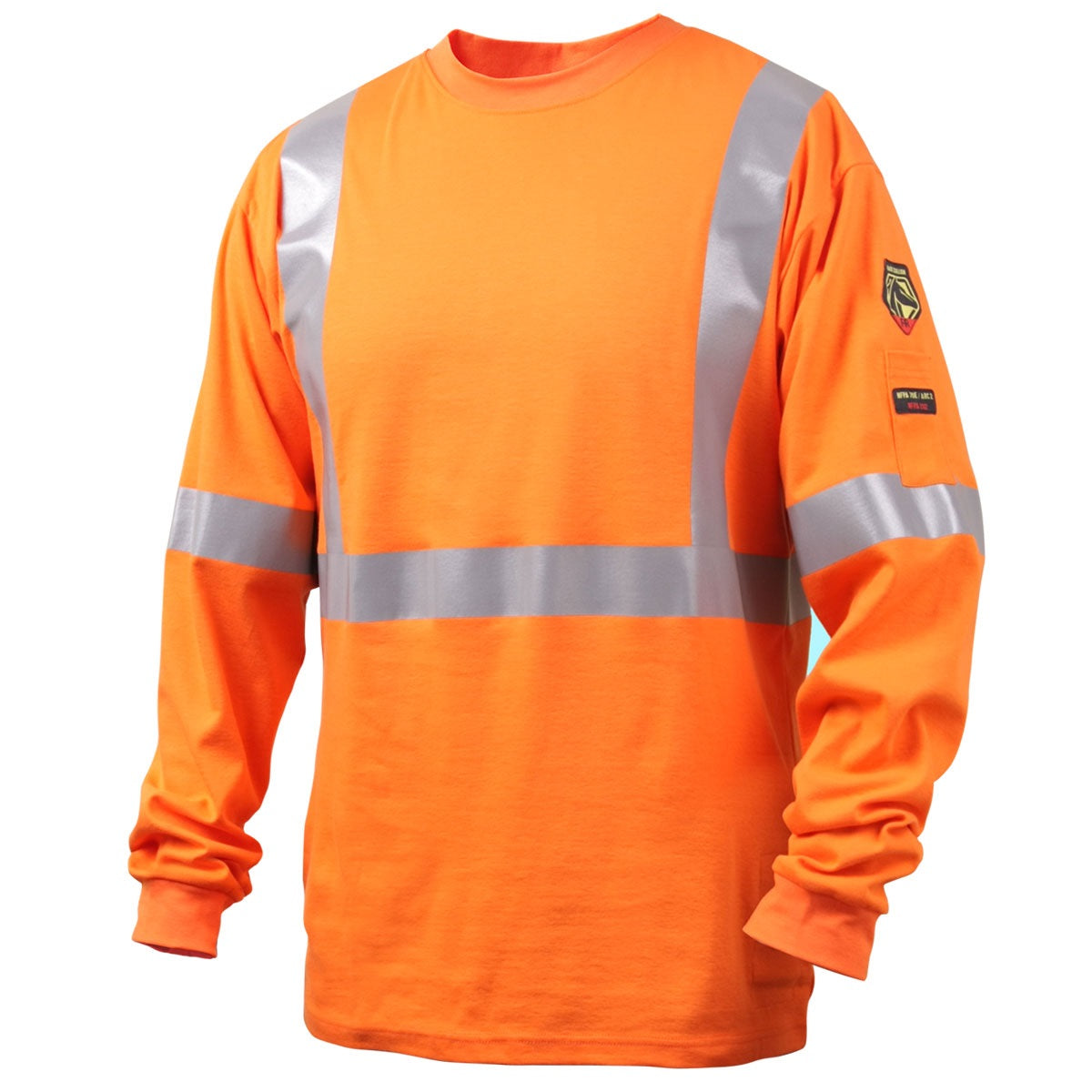
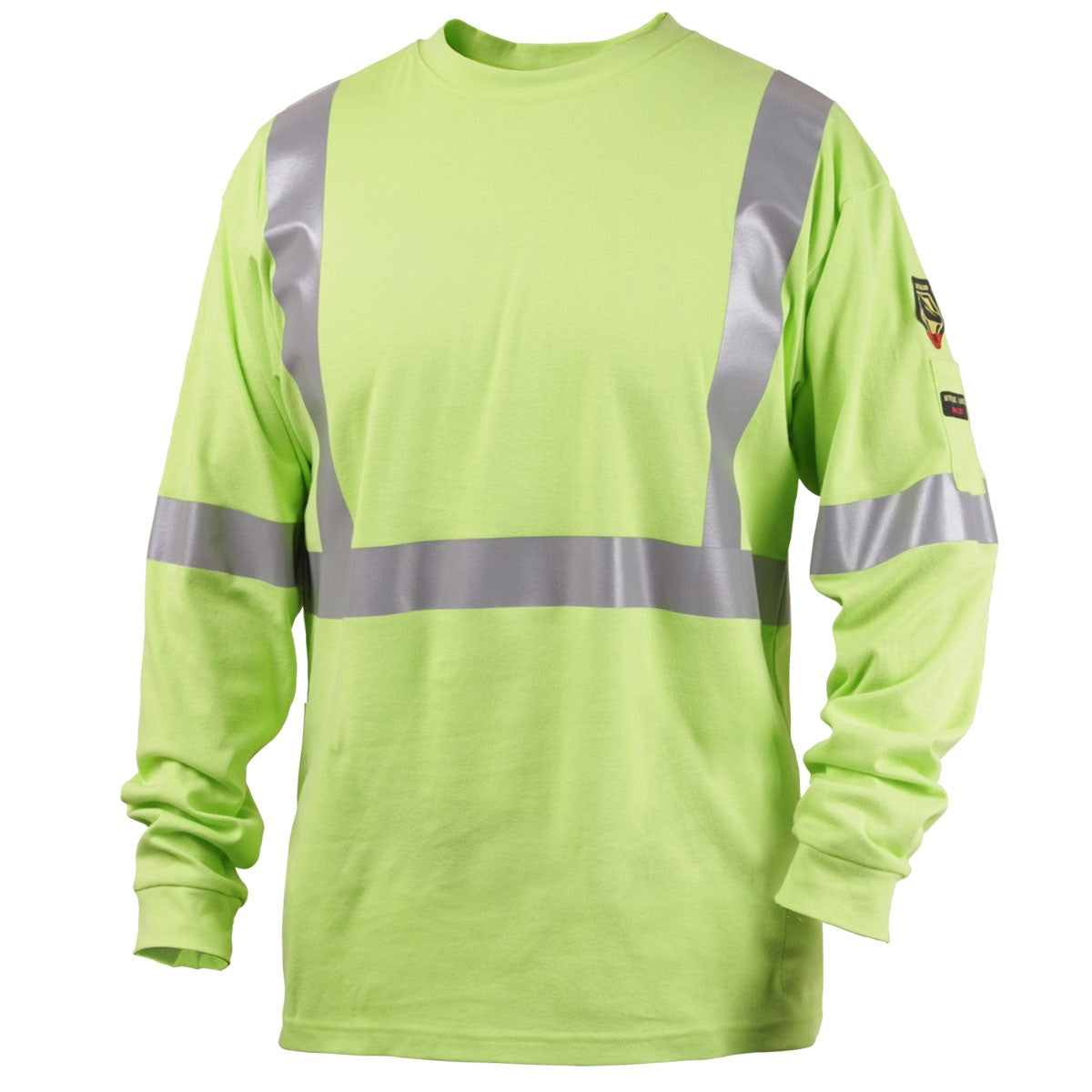
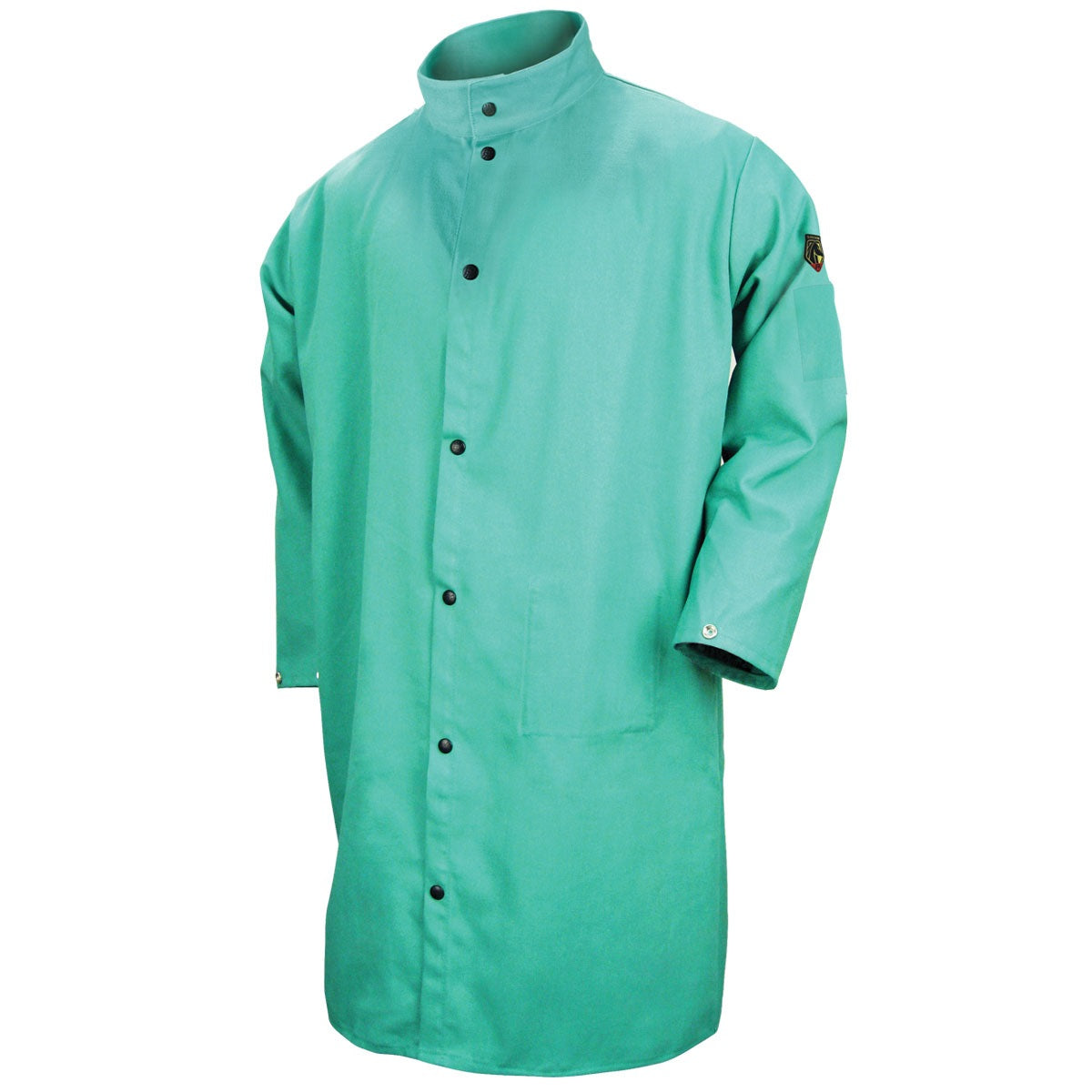
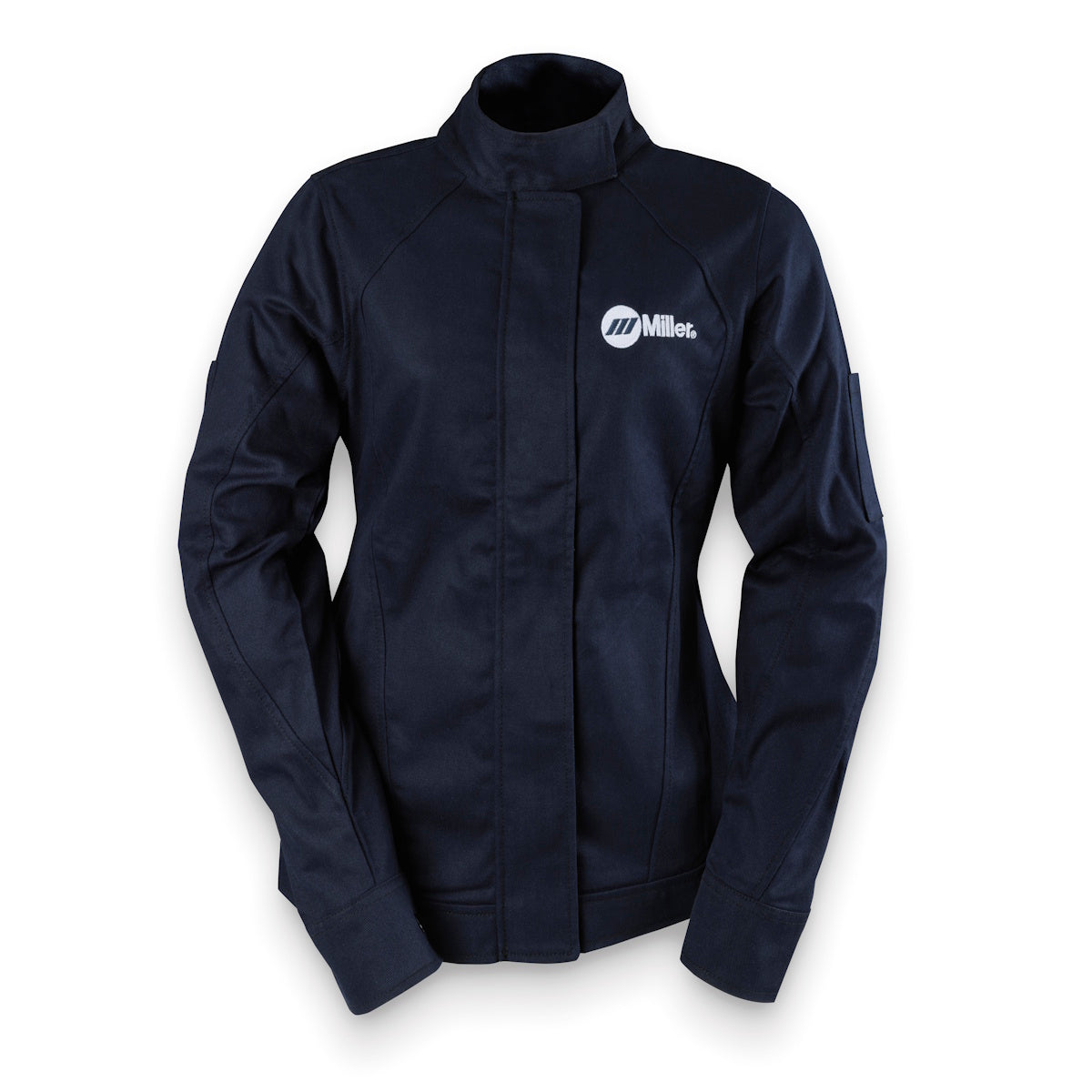
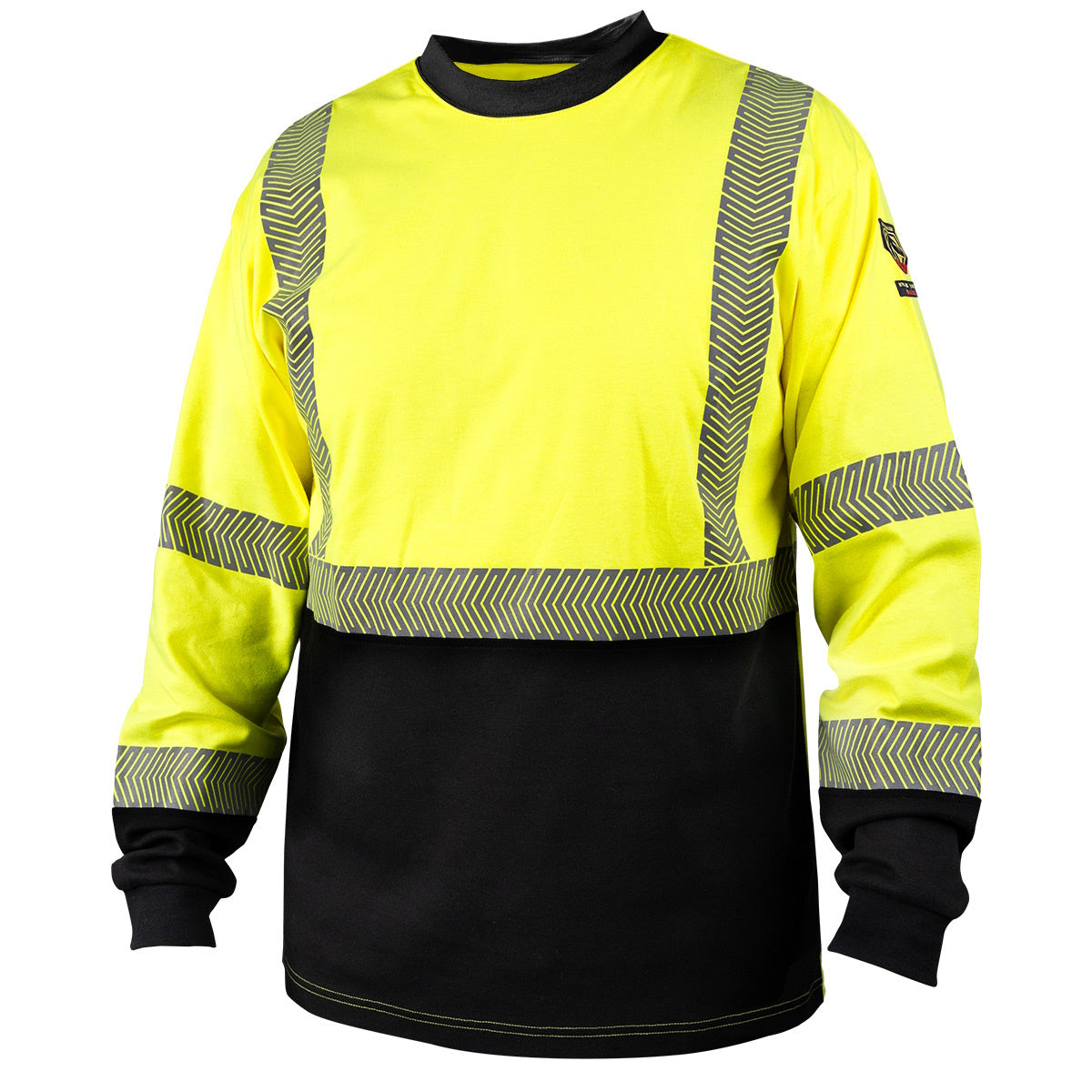
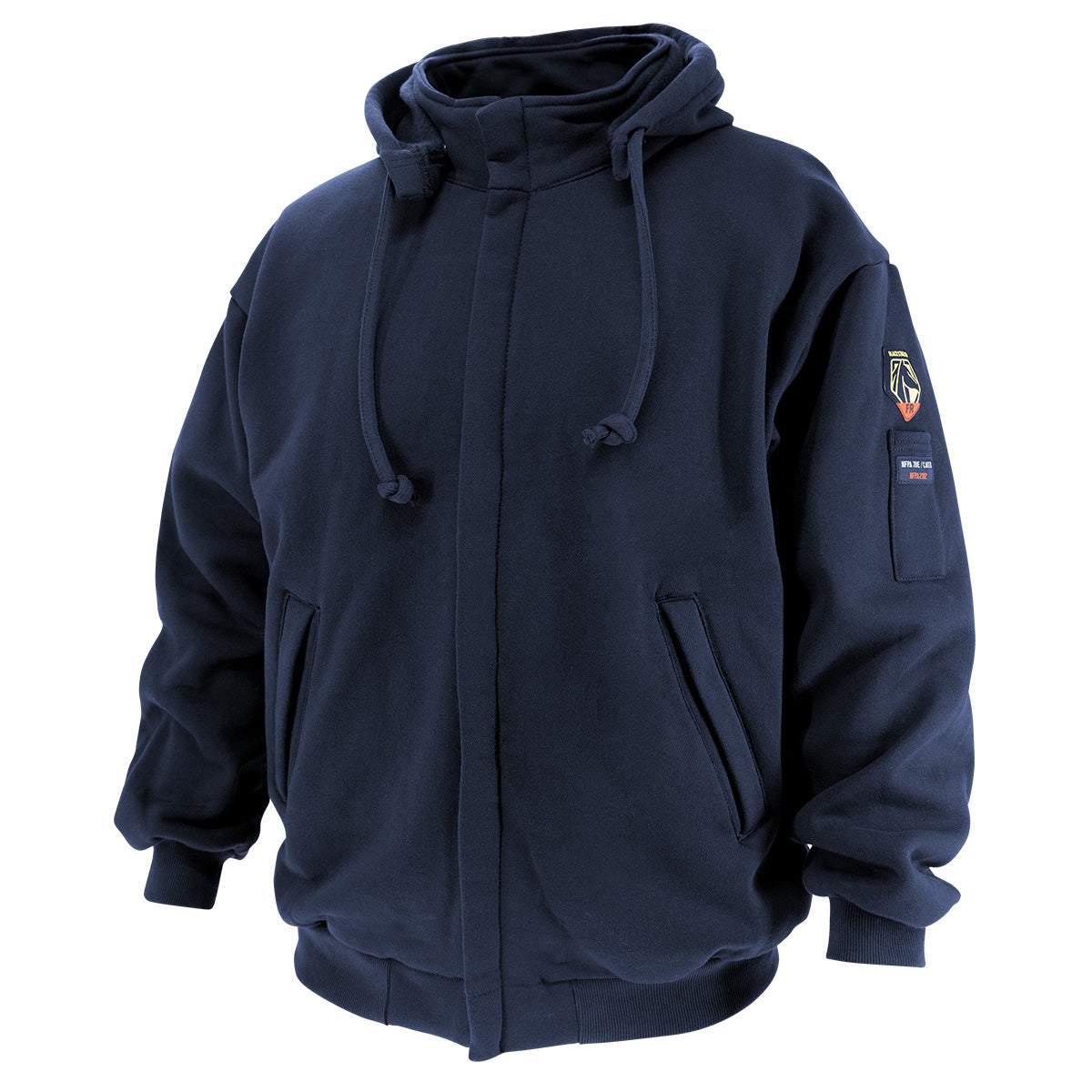
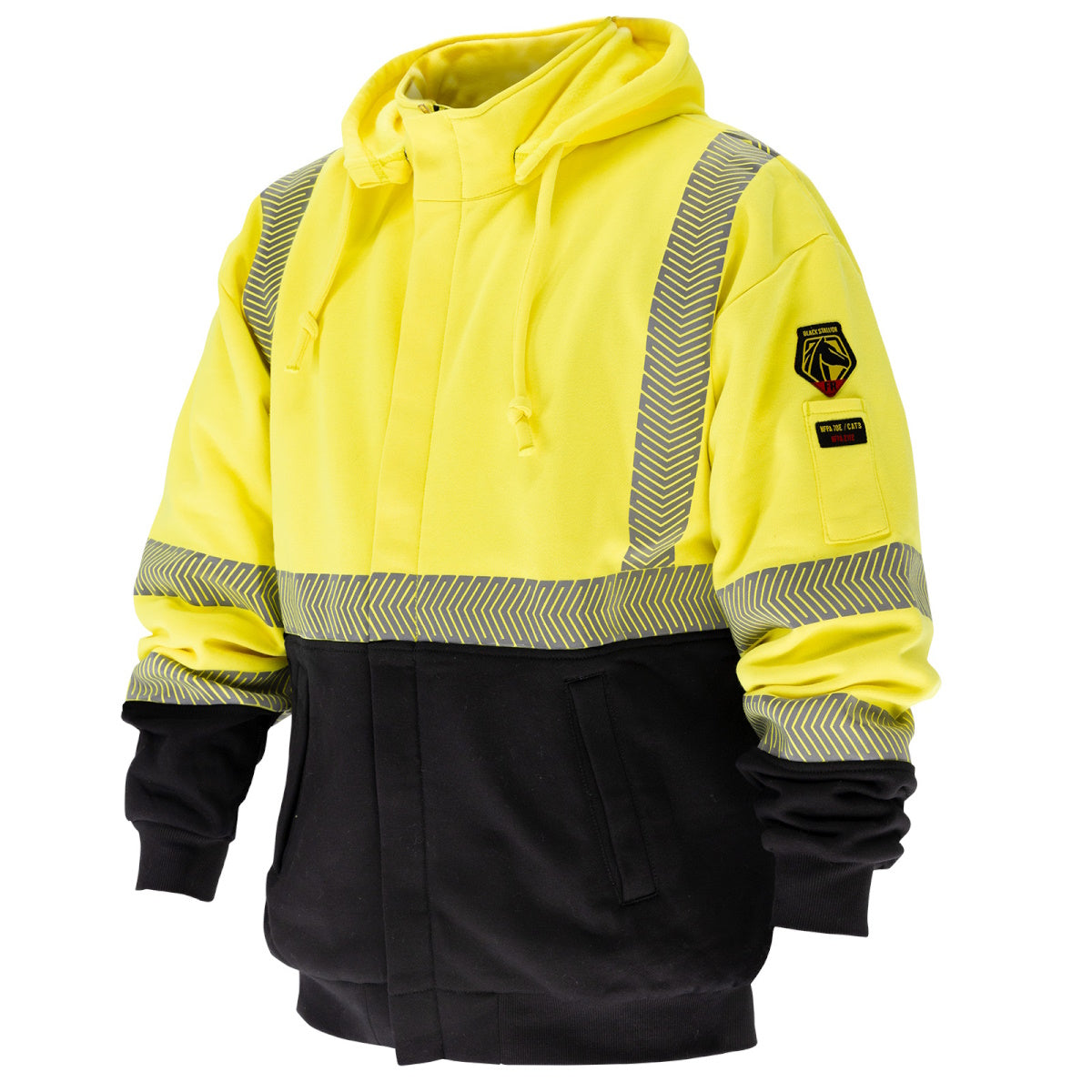
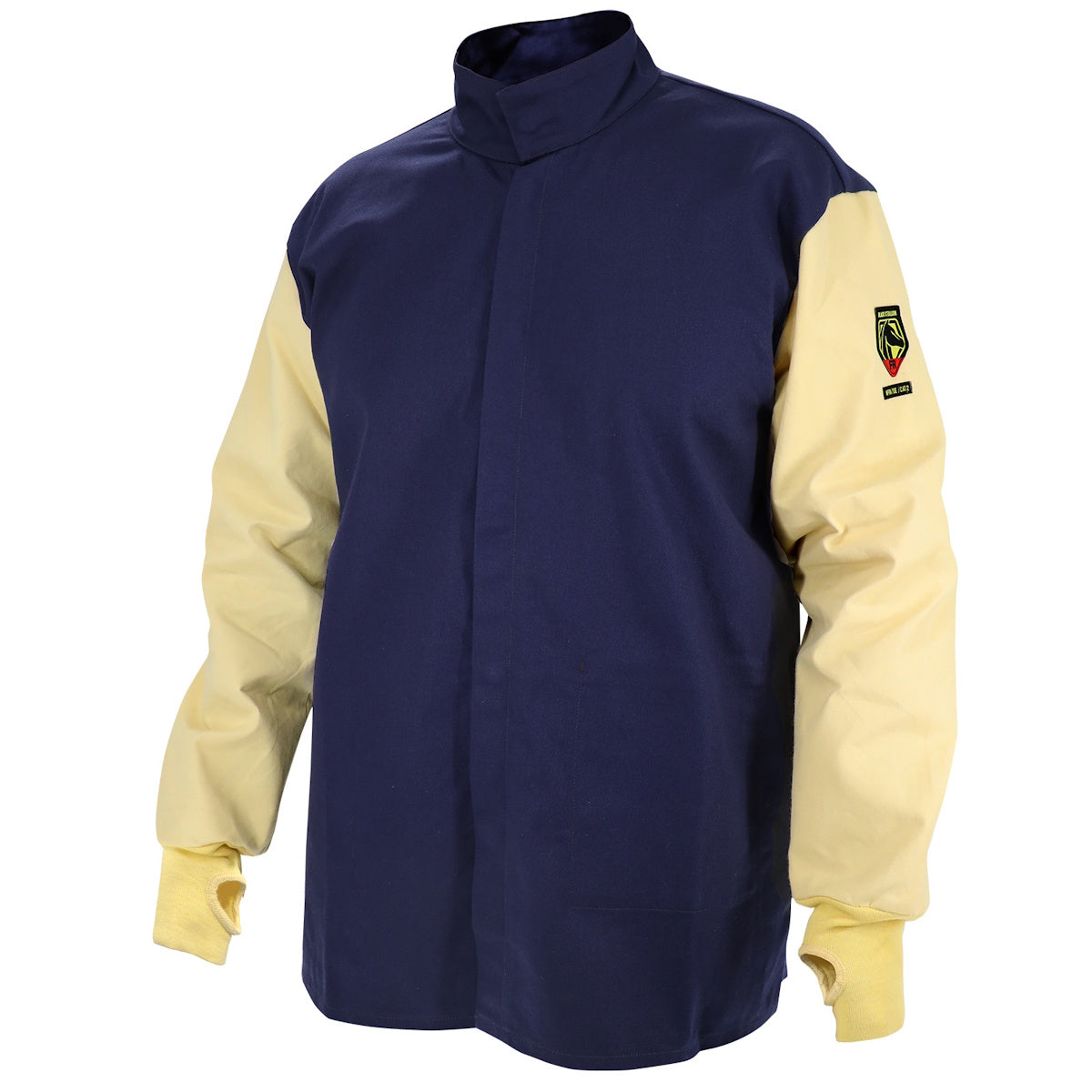
Not every job calls for a full jacket. FR welding shirts give you flame resistance in a lighter layer for TIG, light MIG, or as a base layer under leather. FR hoodies and sweatshirts add warmth in cold shops, and FR shop coats give you longer coverage for bench work and grinding. Women's-cut FR jackets are also available, sized so the sleeves and torso fit without extra fabric to catch spatter. When you only need to protect your arms, pair a lighter layer with welding sleeves.
How to Clean and Care for a Welding Jacket
This is where most welders get tripped up, because leather and FR cotton are not cleaned the same way. Treat one like the other and you can ruin the jacket or strip the very protection you paid for.
Cleaning FR cotton
- It is machine washable. Use warm or cold water and a mild liquid detergent
- Never use chlorine bleach, fabric softener, dryer sheets, or starch. They coat or neutralize the flame-resistant treatment and can leave flammable residue
- Wash it separately from your everyday laundry, so lint and oils from non-FR clothing do not load into the fabric and reduce its protection
- Dry on low heat or hang it to dry, and inspect for char, burns, and thin spots each time. Follow the care label, and retire the jacket when it is worn thin, torn, or soaked with oil or grease, since oil and grease can ignite even on FR fabric
Cleaning and caring for leather
- Do not machine wash or soak leather. Water stiffens it and can ruin it
- Brush off spatter and debris, then wipe it down with a damp cloth and a little leather-safe soap if needed
- Let it air dry away from direct heat, which cracks leather, and never put it in a dryer
- Condition it periodically with a leather conditioner to keep it supple and extend its life
For a hybrid jacket, clean each part by its own rules: the cotton body like FR cotton, the leather sleeves like leather.
FAQs About Welding Jackets
A welding jacket is protective outerwear that shields you from sparks, spatter, heat, and UV while you weld. It is made from flame-resistant materials, most commonly leather, flame-resistant (FR) treated cotton, or a hybrid of the two, chosen so the fabric resists ignition and does not melt onto skin.
It depends on the material. FR cotton jackets are machine washable if you use warm or cold water and a mild detergent and skip bleach, fabric softener, and starch, which degrade the flame-resistant treatment. Leather jackets should not be machine washed or soaked at all. They are spot-cleaned and conditioned instead.
Brush off spatter and loose debris, then wipe the leather with a damp cloth and a little leather-safe soap if it needs it. Let it air dry away from direct heat, never in a dryer, since heat cracks leather. Condition it now and then with a leather conditioner to keep it soft and make it last.
Work a leather conditioner approved by the jacket's manufacturer into the surface, let it soak in, and repeat if the leather is still stiff. Wearing and flexing the jacket helps break it in over time. Avoid harsh chemicals and high heat, which can dry out or damage the leather.
No. A standard Carhartt work jacket is not flame-resistant, and welding gear needs to be. Regular cotton duck can catch fire and keep burning when hot spatter lands on it, and any synthetic content can melt and stick to your skin, which turns a minor burn into a serious one. Carhartt does make a separate FR-rated line, but a normal duck jacket is not welding PPE. For welding, wear leather or an FR-rated jacket. Nothing else is safe.
Cost tracks the material. FR cotton jackets often start under $20 and run up to about $60, hybrids run around $45 to $130, and full leather runs roughly $80 to $230 depending on weight and quality. Buy for your hottest job rather than the cheapest sticker. A jacket that fails on protection is no savings at all.