 Skip to content

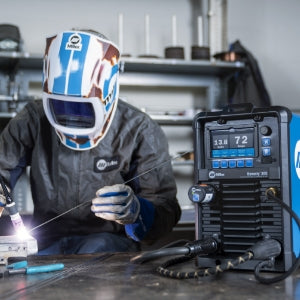
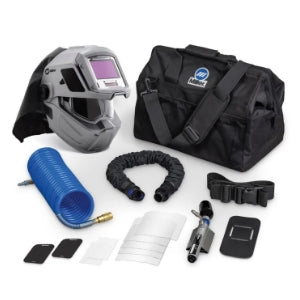

Unlike many modern career options that follow rigid requirements before you can begin working, there are several ways to become a welder. Each option has different pros and cons depending on your specific life situation and your goals. In this detailed guide, we’ll share expert advice on the most popular routes for becoming a welder and help you decide which solution is best for you.
What Do We Mean by “Becoming a Welder?”
Let’s make something clear: Both career welders and hobby welders are considered “welders.” In fact, many people start welding as a hobby first, before deciding to turn it into a career. To start welding as a hobby, all you really need is a beginner-friendly machine, some consumables, and a few accessories.

However, for the sake of this article, we’re specifically going to be focused on people who want a career in welding. In other words, how do you take your skills and turn them into a regular paycheck?
Option #1: Just Start Welding
Unlike electricians or plumbers, there’s really no universal “welder” license. Because of this, many welders simply start their career by learning to weld on their own. Back in the day, you often began learning from a relative or neighbor who knew how to weld. However, with the modern internet, many welders get started by simply watching YouTube or reading helpful articles like the ones you’ll find on the Welding Supplies from IOC blog.
While there isn’t a formal “welder” license, it takes more than just claiming you’re a welder to land a job. Most companies will require you to do some type of welding test in your interview to prove that you’ve got the skills. Depending on the industry, that might be all you need. You pass the test, you get the job; no formal education, college degrees, or certifications required. This is particularly common for certain fabrication jobs where the product you’re welding isn’t highly regulated: Think metal furniture, decorations, repairing farm equipment, etc.

In some industries, things have to be welded according to code. Typically, for these jobs, employers will require “certifications.” It’s incredibly important to understand that most welding certifications do NOT require a degree or any sort of formal education.
Here’s how certification works: You get certified for a specific type of weld. For instance, you might take a test for your AWS D1.1 3G SMAW Plate Certification. This would test your ability to produce acceptable uphill stick welds on carbon steel plates. If you pass the test, you’ll receive a document that lets potential employers know you can perform that specific type of weld.
For some particularly regulated industries, you might be required to have certifications for a bunch of different types of welds. For instance, let’s say you’re trying to get a job in structural steel construction. You’d be working on bridges and large buildings where improper welds could cause accidents that cost lives. For jobs like these, you can bet most employers will require both a welding test in your interview and certifications in all the different types of welds you’ll be expected to perform.

If you’re a self-starter who doesn’t enjoy formal education, becoming a welder by simply starting with a machine can be a great option. While it’s difficult to land your first job with no experience, often a company will take you on as a “welding helper,” where you can learn the ropes. Then it’s just a matter of honing your skills and getting certifications when needed as you move through your career.
Option #2: Trade School
While not required, trade school is becoming a very popular option for new welders. Instead of having to “figure out” how to break into welding on your own, you can pay to have an institute of experts teach you. It’s an excellent option if you want to fast-track the time it takes to start welding professionally.
As a quick note, some community colleges have welding programs that are similar to trade schools. For the sake of this article, we’re going to lump those in with “trade schools.” While there are welding-related programs at universities, these are almost always weld engineering-related degrees, which are different from being a welder. If you’d like to learn more about that, check out this post here.

With welding trade school, there’s no “Cs get degrees” logic. At some colleges, you might be going to class just to get your diploma. However, since there’s no such thing in most states as a “licensed” welder, the only reason to go to trade school is to actually learn. That means the responsibility is on you to get as much out of your classes as you possibly can and then remember those skills. They’re what you’re ultimately paying for.
Another thing to keep in mind when picking a trade school: There are technically no nationally recognized rules that a welding program has to follow. In other words, there are a lot of great welding schools out there, but there are also some scammy options, too. Here are some general tips for picking a legitimate, good trade school:
-
While welding programs have no specific accreditation, trade schools can be formally recognized by the US government. This means they’ve proven to the government that they match the baseline requirements needed for their students to receive federal financial aid.
If you plan on trying to use federal student loans or grants to attend trade school, you’ll have to go to a government-recognized organization.
-
Some trade schools use a curriculum called “AWS SENSE.” This is a program designed by the American Welding Society to focus on the most current welding skills. There are plenty of great trade schools that follow their own curriculum, but the biggest advantage of an AWS SENSE program is that you know you’re not learning out-of-date techniques.
- Do your own homework. Check out reviews for your desired trade schools, compare costs, and talk with schools’ advisement teams. While the above tips will help you find a legitimate school, you can often best determine the quality of a school from what its past students are saying.
After graduating from trade school, the rest of the process is very similar to option #1, only you should have a significant head start in the welding skills category. Some trade schools can also certify you in specific welds, right at the school. You can get certified outside of school, but having it as part of your education can be incredibly helpful.
Option #3: Union/Apprenticeship
We know unions can be controversial. Some welders will tattoo their union onto their chest, while others consider unions to basically be another government body wanting to control their choices (while charging them fees). Especially in certain industries, a union can be an excellent path for becoming a professional welder.
Some unions are specifically for welders, but most cover an entire industry. For instance, you might want to join the local pipefitters union (which includes a variety of different manufacturing positions). Typically, unions will offer some sort of welding apprenticeship. This is where you train under an experienced welder for several years until you can become a journeyman.

To get started with a union, you typically don’t need any welding experience (though it can be helpful). Most unions require you to apply, and if you’re accepted, you’ll be able to start your apprenticeship. For many unions, you are paid during your apprenticeship, as it’ll take several years, though it’s typically not nearly as much cash as a journeyman makes. Usually, it takes around 3 to 5 years to graduate from an apprentice to a journeyman, though this will depend on the union and industry.
In some industries and locations, joining a union can be an excellent option. However, just because you’re part of the club doesn’t mean you won’t have to prove your skills. Even as a journeyman, you might still be required to have certain certifications or pass an initial welding test to land a job.
A wiseman once said, “There are many paths to the top of a mountain.” The routes mentioned above are not the only options, though they are the most common. Many welders will do a combination of the 3 options we mentioned. You can absolutely go to trade school and join a union after. Some unions have their own trade school that apprentices must attend. Ultimately, the details of your exact journey will depend on the industry you’re interested in, your location, your lifestyle, and your family situation.
No matter what path you pick, you’ll want a reliable welding machine and accessories you can hone your skills with. At Welding Supplies from IOC, we have the best prices with the most trusted brands. Check out our full selection here.

